
Plan your move.
Find moving help.
Moving across town or across the country? Compare moving options and make a plan for your next Florida address.

Choose your service. Compare the details. Get ready for moving day.
How are you moving?
Choose the service you need. Your quote request follows the same simple form.

Full moving service
Compare providers for loading, transport, and the packing help your household needs.
Read the planning guidePhoto: Egor Ivlev / Unsplash · Branding added

Auto transport
Plan a separate car shipment with its own pickup, inspection, and delivery arrangement.
Read the planning guidePhoto: Nadja Thöner / Unsplash · Branding added
Self-moving / U-Load
Compare options where you pack and load, with transportation arranged by the provider.
Read the planning guidePhoto: Michal Balog / Unsplash · Branding added

International movers
Coordinate the shipment, documents, destination requirements, and overseas delivery.
Read the planning guidePhoto: Elijah Mears / Unsplash
Ten Florida cities.
Find your next address.
City guides for Florida’s ten largest incorporated places, using the Census Bureau’s July 2025 population estimates.










Source: U.S. Census Bureau, Vintage 2025 city population estimates
Plan the move before booking.
A quote starts the conversation. A written service agreement confirms the booking.
Describe the move
Choose your service, origin, destination, date, and household size. Add the vehicle details if car transport is part of the plan.
Verify your request
After a successful submission, use the email verification link or enter the six-digit code in the Thank You panel.
Compare the details
Check the provider, inventory, price, access requirements, and timing before making a booking with a moving company.
Make yourself
at home in Florida.
Ten guides for choosing the home and getting everyday life running in Florida.

Florida neighborhoods
Compare Florida neighborhoods using exact addresses, daily travel, housing costs, and property requirements.
Read the guidePhoto: Osmany M Leyva Aldana / Unsplash

Florida schools
Organize Florida school enrollment, records, transport, childcare, and the household moving schedule.
Read the guidePhoto: Vladislav Vasilev / Unsplash

Florida government
Organize official address updates, appointments, property services, and records during a Florida move.
Read the guidePhoto: Katie Moum / Unsplash

Florida cost of living
Compare Florida housing and transition costs using the specific home, commute, utilities, and moving service.
Read the guidePhoto: Recha Oktaviani / Unsplash

Florida housing
Check Florida housing dates, rental terms, loading access, utilities, and records before delivery.
Read the guidePhoto: Daniela Captari / Unsplash

Florida jobs and commutes
Plan Florida work and commuting needs alongside your housing choice, internet setup, and moving dates.
Read the guidePhoto: Sami Ahmed / Unsplash

Florida hurricane planning
Keep emergency supplies, official alerts, evacuation information, and moving backups accessible during a Florida move.
Read the guidePhoto: Mathurin NAPOLY / matnapo / Unsplash

Florida utilities
Arrange Florida utilities and internet with the correct provider, activation dates, records, and setup plan.
Read the guidePhoto: Amir Mohammad HP / Unsplash


A guide for the move
you’re making.
Thirty practical moving guides, from packing one room to coordinating an interstate shipment.

Local moving in Florida
Compare local Florida moving services using the inventory, carrying conditions, hourly terms, and receiving plan.
Read the guidePhoto: Dina Badamshina / Unsplash

Long-distance moving from Florida
Plan a long-distance Florida move with clear shipment details, timing, documents, backup storage, and delivery preparation.
Read the guidePhoto: Karsten Würth / Unsplash

Interstate moving
Check interstate moving providers and organize the estimate, inventory, contract, timing, and delivery records.
Read the guidePhoto: Meriç Dağlı / Unsplash

Packing for a Florida move
Pack room by room with suitable cartons, handling plans, accessible records, and a practical first-night kit.
Read the guidePhoto: Luke Heibert / Unsplash

Florida moving costs
Understand the items and conditions behind Florida moving costs and compare full service with self-moving options.
Read the guidePhoto: Aaron Lefler / Unsplash

Choosing Florida movers
Check Florida moving providers, compare written estimates, and confirm the service before paying.
Read the guidePhoto: Dimitri Karastelev / Unsplash

A Florida moving checklist built around real dates
Organize a Florida move around confirmed housing dates, packing deadlines, service setup, documents, and delivery.
Read the guidePhoto: Glenn Carstens-Peters / Unsplash

Apartment and condo moving
Plan apartment and condo moves around elevator reservations, loading access, paperwork, furniture dimensions, and delivery.
Read the guidePhoto: Point3D Commercial Imaging Ltd. / Unsplash

Moving with a family
Coordinate a family move with care routines, school records, essential belongings, packing, and first-day setup.
Read the guidePhoto: Shoham Avisrur / Unsplash

Senior moving and downsizing
Plan a senior move around personal decisions, care continuity, furniture fit, specialist handling, and first-day setup.
Read the guidePhoto: Kate Darmody / Unsplash

Student moving in Florida
Plan a student move with lease dates, shared-item decisions, a complete budget, equipment access, and receiving arrangements.
Read the guidePhoto: Aim | @photobypitcha / Unsplash

Office moving in Florida
Organize an office move with equipment records, building access, downtime planning, placement, and delivery checks.
Read the guidePhoto: Andrea De Santis / Unsplash

Auto transport from Florida
Compare Florida auto transport with accurate vehicle details, condition records, delivery windows, and a complete budget.
Read the guidePhoto: Kern Morris / Unsplash

Self-moving and U-Load
Compare self-moving, U-Load, containers, and truck rental through labor, placement, packing, travel, cost, and timing.
Read the guidePhoto: Maryam Iftikhar / Unsplash

International moving from Florida
Plan an international Florida move with destination requirements, shipment records, packing, storage, and realistic timing.
Read the guidePhoto: Kelly Sikkema / Unsplash

Moving and storage in Florida
Compare moving storage arrangements, access, handling, monthly charges, property timing, and redelivery.
Read the guidePhoto: JOSHUA COLEMAN / Unsplash

Piano moving in Florida
Plan piano handling through instrument details, access measurements, specialist equipment, written service, and delivery preparation.
Read the guidePhoto: Amir Doreh / Unsplash

Moving fragile items
Prepare fragile belongings with suitable packing, condition records, declared handling needs, storage checks, and delivery inspection.
Read the guidePhoto: Loo Dalla Costa / Unsplash

Furniture moving
Plan furniture moves with measurements, disassembly decisions, carrying access, protection, pricing, and placement.
Read the guidePhoto: Francesca Tosolini / Unsplash

Small moves in Florida
Compare small Florida moves through inventory, minimum charges, access, self-moving options, and delivery needs.
Read the guidePhoto: Andrea Davis / Unsplash

Last-minute moving
Organize an urgent move by confirming dates, the provider, inventory, loading access, packing, and documents.
Read the guidePhoto: Josh Lemmon / Unsplash

Moving with pets
Plan pet supervision, travel supplies, property rules, weather backups, and a safe first room during a move.
Read the guidePhoto: Erda Estremera / Unsplash




Moving from California to Florida
Organize a California to Florida household move with complete shipment details, written terms, accessible essentials, and delivery backups.
Read the guidePhoto: Paul Hanaoka / Unsplash

Moving from Georgia to Florida
Plan a Georgia to Florida move with interstate provider checks, property access, inventory, written pricing, timing, and receiving.
Read the guidePhoto: Sunira Moses / Unsplash

Moving from Florida to New York
Plan a Florida to New York move with receiving-building checks, a clear inventory, written estimates, timing, and storage backup.
Read the guidePhoto: Ethan Walsweer / Unsplash


Before you request a quote
Does a quote request book my move?
No. A request begins the comparison process. Your selected provider confirms the service, price, dates, and booking through its own written agreement.
Can I request household moving and car transport together?
Yes. For a qualifying longer route, the moving form offers a companion car transport request. Give the vehicle details and review the resulting household and vehicle services separately.
Which dates can I choose?
The form starts fourteen days ahead. You can choose a date from tomorrow through 180 days in the future. A chosen date remains a preference until the provider confirms availability.
How does verification work?
After the request service accepts your submission, the Thank You panel offers manual six-digit verification. The email link and verification processing use the central Move Network system.
Are these photographs of the company’s staff?
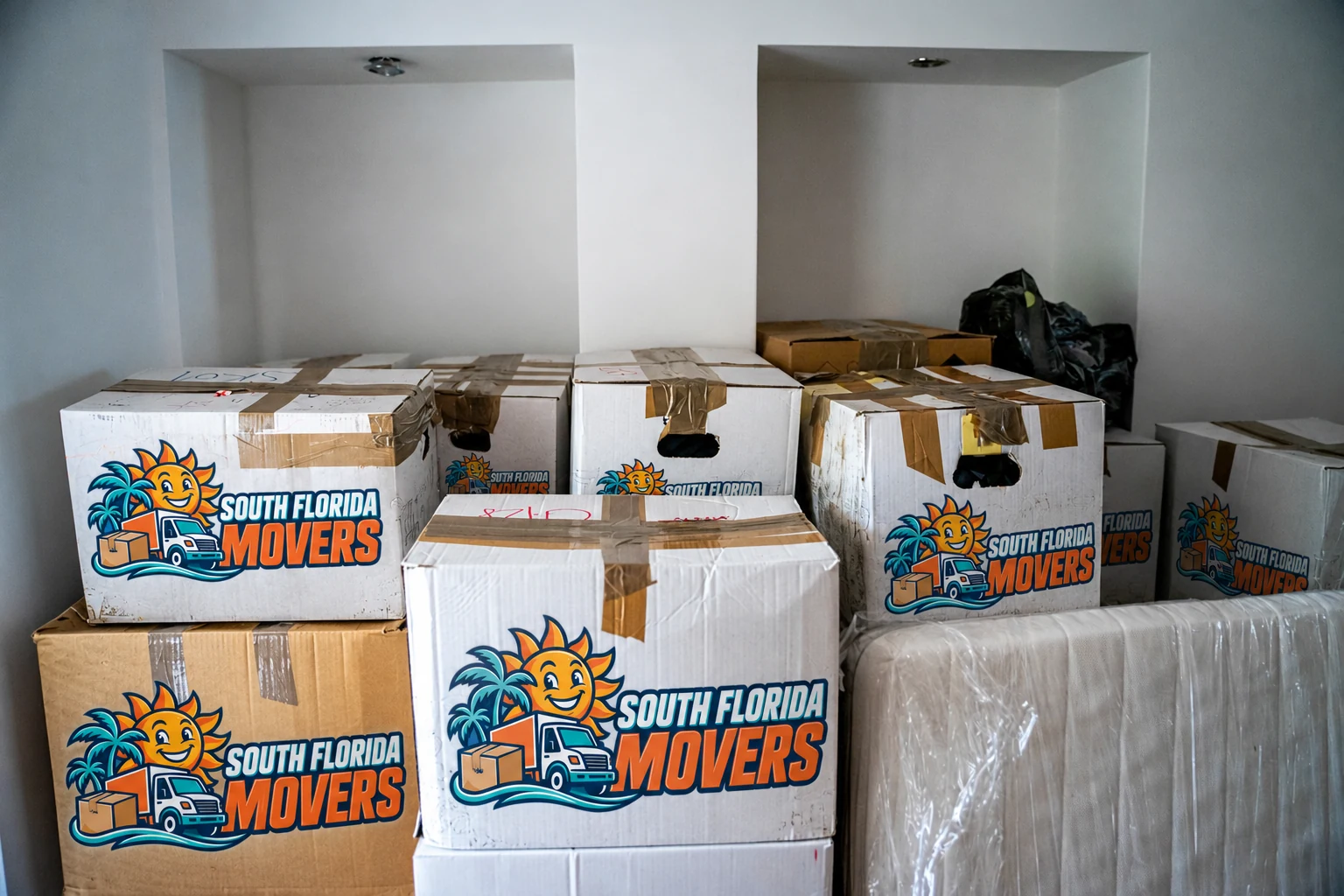
These are licensed stock photographs. Some moving photos have South Florida Movers branding added to the truck, shirts, or cartons. They do not show our actual fleet, staff, or customers. Your selected provider performs the moving service.
Make the moving plan useful before moving day.
Start with confirmed addresses, a complete inventory, and the work your household can manage. These practical notes explain the decisions behind a useful moving request.
Build an inventory that matches the move
An estimate starts with what will travel. Walk through the home room by room and write down large furniture, appliances, boxes, outdoor equipment, and anything stored out of sight. Include the garage, balcony, attic, closets, and storage unit. A list that says two bedrooms tells a mover much less than a list that includes two beds, a sleeper sofa, a dining table, thirty boxes, and a heavy workbench. Describe the actual shipment, even if some of the rooms will stay furnished for another person.
Separate the inventory into items to move, items to sell or give away, and items that still need a decision. Finish those decisions before the final estimate when possible. A truck reservation based on an unfinished list can leave too little space or reserve capacity you no longer need. If the shipment changes after an estimate, send a dated update and ask whether the price, crew, or equipment needs to change. Keep the response with the original estimate so the last agreed scope is easy to find.
Record dimensions for pieces that could cause access problems. A sofa may fit through the front door but fail to turn in the hallway. Measure the furniture, the narrowest doorway, the stair landing, and the elevator opening. Photograph unusual pieces from several angles and include a picture of the route through the building. Tell the mover about removable legs, glass shelves, wall attachments, and loose components. Describe uncertainty honestly rather than assuming that disassembly will solve every problem.
Create a separate list for possessions you will carry yourself. Identification, keys, medication, important paperwork, small valuables, and a working phone charger usually belong in your personal travel bag. Do not mix that bag with the boxes waiting for pickup. If several people are helping, mark a room or shelf as the area that stays off the truck. A clear boundary is easier to follow than a verbal reminder repeated during a busy loading day.
Keep a copy of the inventory available at both addresses. Numbering boxes can help you check delivery without opening every carton at the doorway. A spreadsheet or a simple paper list works if someone maintains it. Add short descriptions that help with placement, such as kitchen cookware or bedroom winter clothes, rather than labels that reveal expensive contents. Photograph the packed rooms before the crew arrives. The inventory is a working record of your decisions, not a substitute for the mover's shipment documents or a guarantee of coverage.
Compare written estimates on the same scope
Send each company the same inventory, pickup address, delivery address, preferred dates, and access description. That common starting point makes differences in price easier to understand. If one mover includes packing and another prices only transportation, the totals do not describe the same service. Ask for an itemized estimate that identifies the work included, the work excluded, and the assumptions behind the price. Save the version you receive rather than relying on a figure quoted during a phone call.
Check how the charge is calculated. A local move may be quoted using an hourly crew rate, while a longer shipment may use other pricing methods. Ask when billable time begins and ends, whether travel time is separate, and whether a minimum charge applies. For a shipment priced on weight or another measured quantity, ask how that quantity is established and what documents you will receive. Do not assume that a lower advertised rate produces a lower final total.
Discuss stairs, elevators, walking distance, parking, gates, and truck access before comparing prices. Tell the estimator whether a large truck can reach the loading point. If a smaller vehicle may be needed, ask how that service is charged and who decides that it is necessary. Include both addresses in the discussion. A straightforward pickup does not cancel a difficult delivery, and a reserved elevator does not guarantee an unrestricted loading area outside the building.
Clarify what happens when your plans change. Ask about rescheduling, cancellation, an added stop, a revised inventory, and storage between pickup and delivery. Read the relevant terms in the written documents. If a representative explains a term differently from the contract, ask for a corrected document or a written explanation before paying. Keep a record of the question and answer. A practical comparison includes the cost of likely changes as well as the price of the original plan.
Avoid turning an unconfirmed online range into your household budget. A quote request helps you begin conversations; it does not reserve a crew, fix a delivery date, or create a contract with a mover. Use estimates to compare a defined service, then verify the company and review its documents before booking. If a price looks unusually low, ask what would make it change. A clear explanation is more useful than reassurance that everything will be taken care of.
Confirm parking, elevators, and loading access
Contact the manager or owner at each property before reserving the moving date. Ask which days and hours allow moving, whether an elevator reservation is required, and whether the building asks for insurance paperwork. Get the instructions in writing and pass them to the mover. Use the name and contact information of a person who can answer questions on the day. A booking with the moving company does not automatically create a booking with the building.
Walk the full path between the truck and the rooms. Look for steps, narrow gates, uneven pavement, steep ramps, low branches, and turns that make a large item difficult to carry. Measure the elevator cab and door separately. Identify which entrance the crew must use and whether access codes expire or change. If a loading bay needs an attendant, confirm the arrangement before arrival. Do not promise a truck can park in a place simply because a passenger vehicle fits there.
Ask who controls parking outside the property. The answer could be the city, a private garage, the association, or the owner. Follow the relevant process for a loading reservation or temporary permission, if one is needed. A handwritten note on a cone does not establish permission to block a public space. Share the confirmed parking instructions with the crew and include an alternative loading location that the property approves if the first space is unavailable.
Explain long carries and stairs during the estimate. Count actual flights and describe landings, rather than saying the apartment is only one floor up. Record the distance from the legal truck position to the door when practical. Ask whether those conditions affect the price or required crew. A household that can stage boxes close to an approved entrance may reduce handling time, but should do that only where boxes will not block residents, fire exits, or accessible paths.
Leave room for ordinary building activity. Neighbors may need the elevator, deliveries may use the loading area, and the manager may need a corridor clear. Plan the move so the crew knows where furniture can wait without obstructing access. Keep pets and children away from the carrying route. Before the final truck leaves, check the loading area, elevator, and hallways with the person responsible for the property. Take photographs of existing damage before work starts and record any new concern promptly.
Build a schedule around confirmed dates
Start with dates you can prove: the end of the old lease, the availability of keys at the new home, a closing appointment, and any building reservation. Place those dates on one calendar. Then identify the gaps where a moving service can fit. A preferred date is useful, but it does not become confirmed until the company accepts the booking and the property permits the work. Keep written confirmations together so everyone follows the same schedule.
Work backward from pickup. Set a day to finish the inventory, a day to decide what will not move, and a realistic packing period. Add time for donating furniture, arranging disposal, or collecting belongings from another address. If a task depends on another person, confirm that person's availability early. The aim is to avoid several unfinished jobs competing for the final evening. A short list of dependencies is often more useful than a long checklist with no assigned dates.
Distinguish pickup timing from delivery timing. Ask whether the carrier offers a specific delivery appointment or a delivery window, and how you will receive updates. Plan your own travel around the terms that are actually agreed. If you need a fixed date for work or school, discuss that need before signing and ask what happens if the shipment arrives outside your preferred time. Keep clothes, medication, and work essentials with you when you might reach the destination before the truck.
Add a practical buffer where your housing arrangement allows it. A little overlap between homes can provide time for cleaning or unpacking, although it also has a cost. Compare that cost with temporary lodging, an extra truck day, or storage if something slips. Do not extend a rental or book a hotel without checking the cancellation conditions. Choose the backup you can afford, then note the point at which you would need to activate it.
Confirm the plan again shortly before the move. Check the arrival instructions, the crew contact, the agreed service, the payment arrangement, and the delivery contact. Send changes in one clear message rather than scattering updates across several conversations. If weather, construction, or a delayed closing affects access, notify the mover and property manager promptly. On moving day, give one household member responsibility for decisions and documents. Helpers can handle boxes, but the person coordinating the plan should know which decisions are already settled.
Keep a budget for the whole transition
Write down the moving charge and the costs surrounding it. Packing materials, disposal, temporary lodging, travel, storage, deposits, cleaning, and missed work may belong in the same plan. Include expenses at both addresses. A low transportation estimate can still produce an expensive transition if the new home is not ready or if another month of storage becomes necessary. Use current written quotes and actual household obligations rather than a statewide average that may not describe your situation.
Separate confirmed costs from estimates. Mark a deposit you have already paid differently from a possible charge you are still discussing. Record due dates so money is available when the relevant service requires payment. Ask whether a quoted amount includes taxes, materials, and the agreed access conditions. Keep a small reserve for changes you can realistically expect. The reserve is a planning choice, not permission for a company to add unexplained charges to a contract.
Compare options using the complete workload. A rental truck can require fuel, protection options, equipment, loading help, overnight stays, and a return trip. A container may require placement permission, storage time, and labor at both ends. Full service may include tasks that a cheaper alternative leaves to you. Assign a cost or a time requirement to those missing tasks. The better choice is the arrangement that fits your money, physical ability, available help, and schedule.
Reduce the shipment deliberately. Check whether an item is worth moving based on its condition, replacement cost, attachment, and space at the destination. Do not discard useful furniture just because someone quotes a general rule about shipping old pieces. Measure the new room first, then decide. If you sell or donate items, leave enough time for collection. An uncollected sofa on pickup morning remains part of the logistical problem even if your budget assumes that it is gone.
Review the budget after each major confirmation. A changed move date, an added vehicle, or a new storage requirement can affect more than one line. Keep receipts and compare actual spending with the plan as the move progresses. If a company requests a payment that does not match the documents, pause and ask for an explanation. Do not send extra money solely because an unexpected message uses an urgent tone. Verify the request through the contact method you established when booking.
Prepare for delivery before the truck arrives
Confirm that someone can receive the shipment throughout the agreed delivery period. Give the mover a working phone number and a backup contact who understands the plan. Tell the provider about gates, parking, loading hours, elevator reservations, and any change in access at the destination. If the new home is unavailable, discuss the consequences before the truck is on its way. A closed building or missing key can affect the whole delivery arrangement.
Plan furniture placement before unloading. Measure the main rooms and decide where beds, desks, and large cabinets will go. Use simple room names that match the carton labels. If several bedrooms are similar, put a temporary label at each door. Ask the property owner before attaching anything to a painted surface. Keep the carrying path clear and make sure someone can answer placement questions without sending the crew between different household members who give conflicting instructions.
Check delivered items against the shipment record. Count cartons, confirm major furniture, and look for visible damage as items arrive. Take clear photographs of a concern and note it on the relevant paperwork before signing when the process permits. Do not describe an item as received if it is missing. Ask the crew or coordinator how to report a problem properly. An informal conversation at the door may not replace the written notification required by the company's claim procedure.
Know the payment arrangement before delivery. Confirm which balance is due, which methods are accepted, and when payment occurs under the agreement. Keep receipts. If a charge changes, ask for the reason and written breakdown. Do not rely on memory to compare the new amount with an estimate from several weeks earlier. Having the documents available makes that discussion easier. If you need help with a dispute, use the appropriate consumer resources for the type of move rather than an unrelated office.
Unpack essential rooms first. Set up a place to sleep, basic bathroom supplies, medication storage, and whatever you need for the next work or school day. Inspect important equipment when practical, then keep packaging that may be relevant to a reported problem until you receive instructions. Finish the inventory check as you unpack. A missing small item is easier to investigate when the carton number and destination room are known. Save the moving records after the truck leaves so you can follow up with specific information.
Contact South Florida Movers
Ask about the website, a moving quote request, or the information in a guide. If your question concerns a submitted request, include its submission identifier.
This site provides Florida moving guides and a way to request moving or transport quotes. Your selected provider performs the service and confirms the booking through its own agreement.
Company details
South Florida Movers1 FORT LAUDERDALE BEACH BLVD 110
FORT LAUDERDALE, FL 33316
support@southfloridamovers.com
For an existing moving reservation, contact the provider named on your booking agreement.
Privacy policy
Updated October 10, 2026.
This policy covers the South Florida Movers website. For privacy questions or requests about information you supplied, email support@southfloridamovers.com. The company contact address is 1 FORT LAUDERDALE BEACH BLVD 110, FORT LAUDERDALE, FL 33316.
Moving requests and location searches
The estimate form asks for your name, email, phone number, moving locations, preferred date, household details, and optional vehicle information. When the request service is connected, it uses these details to process your request, verify it through Move Network, and allow selected service providers to discuss the services you requested. A household move and companion car transport request may require separate providers.
ZIP and city searches send the text you enter to the location suggestion service. A submitted request also includes the page path, page title, referral information, and campaign parameters when present. The form does not store drafts in your browser. Your browser sends technical information, such as an IP address and browser information, when requesting pages or services.
Share only details needed for your request. Do not enter payment card details, passwords, identification numbers, or medical information into the moving form. Submitting or verifying a request does not book a move. For information supplied directly to a moving provider, contact that provider and review its privacy policy.
Advertising and cookies
This review version does not run advertising or analytics tags. If Google advertising is enabled, Google and other advertising vendors may use cookies, web beacons, IP addresses, and similar technology to serve and measure ads. Third-party vendors, including Google, may use cookies based on visits to this website or other websites. Google's advertising cookies allow Google and its partners to personalize ads using that browsing activity.
You can manage personalized Google ads through Google Ads Settings. Read how Google uses information from sites that use its services. Advertising disclosures and any required on-site consent controls must be updated when advertising services are added.
Questions about your information
Email support@southfloridamovers.com with your question and, if relevant, the submission identifier for your request. Do not send sensitive documents by email unless a specific need and a suitable method have been confirmed. Requests concerning a provider's records should also go to the provider named on your agreement.
Terms of use
South Florida Movers provides planning guides and quote-request tools. A request, a verified request, and a preferred moving date are steps in processing your information. None is a confirmed reservation, guaranteed price, or confirmed provider availability.
Your selected moving or transport provider performs its service under its own agreement. Check its current registration, service scope, written estimate, cancellation terms, protection arrangement, and delivery process before paying. Confirm details directly with that provider before booking.
The guides provide practical planning information. Check current agency instructions, property rules, and provider terms for your circumstances. Decisions involving legal, medical, technical, or financial questions may need the relevant qualified professional. A resource link does not mean an agency endorses this site or a provider.
The pages use licensed stock photographs. Some photographs have South Florida Movers branding added to trucks, shirts, or cartons. They do not identify the company's actual fleet, employees, or customers. Photographer credits appear with the images.
For questions about these terms or the website, contact support@southfloridamovers.com.